News

Ginzburg, Marrone, Pomella e Vercellone

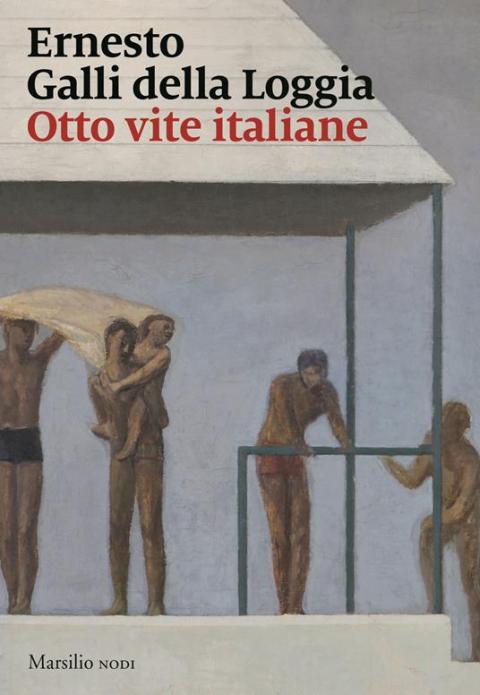
Otto vite italiane by Ernesto Galli della Loggia

Otto vite italiane by Ernesto Galli della Loggia has been reviewed by La Repubblica. To download the review, click here.

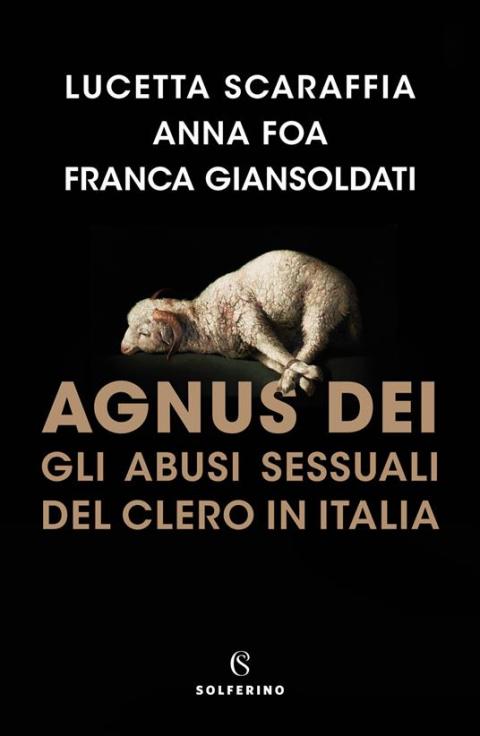
Agnus Dei. Gli abusi sessuali del clero in Italia by Lucetta Scaraffia, Anna Foa and Franca Giansoldati

Agnus Dei. Gli abusi sessuali del clero in Italia by Lucetta Scaraffia, Anna Foa, Franca Giansoldati is now available.

"Information on sexual abuses carried out by the Catholic clergy in Italy is scarce. In the absence of independent investigations and trustworthy journalistic inquiries, once can only rely on the information provided by the website of the no-profit organization ‘Rete L’Abuso’. The organization, founded and chaired by Francesco Zanardi, who was himself a victim of abuse, gathers and collects a multitude of materials on the subject, albeit in a rather chaotic manner. To write this book, its authors spent countless hours consulting and organizing the documents stored on the website, that constitute an essential starting point to any attempt at analysis of this phenomenon in Italy. They also move us to a deep reflection upon the modalities not just of the abuse, but also of its cover-up at the hands of the Church. It has been widely demonstrated, how the Catholic Church’s modus operandi remains the same all over the world: hide and conceal the known cases, show utter indifference toward the victims and protect the alleged abusers at all costs.

The study of particularly significant cases of violence and abuse carried out by the clergy is at odds with the general opinion and the current legal culture, with the approval of new legislation regarding cases of rape and sexual harassment. The distance between the Church’s stance on the matter and that of the surrounding civil society is undoubtably growing wider by the day. This book is, thus, also an appeal to the Church as an institution to effectively intervene and put an end to this established system of cover-ups, starting with the identification and adequate punishment of the perpetrators. Furthermore, it is also an appeal to all Catholics: stop being passive and tolerant about this, don’t feel discouraged or cynical, and take action to save the Church from itself. This is the way to enact a profound change inspired by the teachings of the Gospels."

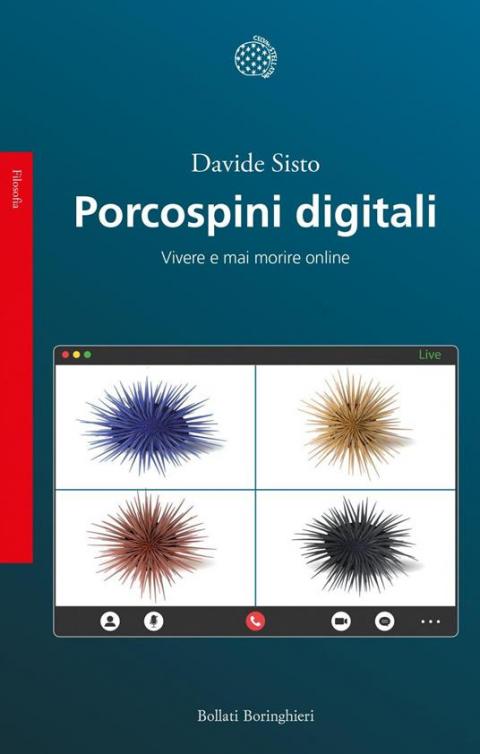
Porcospini digitali by Davide Sisto

The new Davide Sisto's book Porcospini digitali is now available, published by Bollati Boringhieri.

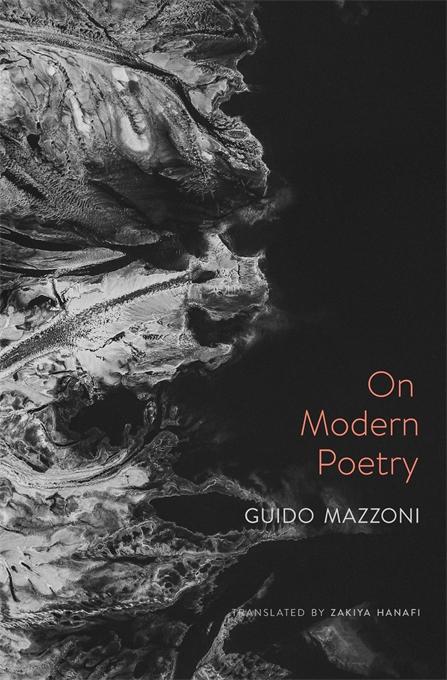
On Modern Poetry by Guido Mazzoni

Sulla poesia moderna by Guido Mazzoni has been recently published in USA by Harvard University Press under the title On Modern Poetry.

An incisive, unified account of modern poetry in the Western tradition, arguing that the emergence of the lyric as a dominant verse style is emblematic of the age of the individual.

Between the end of the eighteenth century and the beginning of the twentieth, poetry in the West was transformed. The now-common idea that poetry mostly corresponds with the lyric in the modern sense—a genre in which a first-person speaker talks self-referentially—was foreign to ancient, medieval, and Renaissance poetics. Yet in a relatively short time, age-old habits gave way. Poets acquired unprecedented freedom to write obscurely about private experiences, break rules of meter and syntax, use new vocabulary, and entangle first-person speakers with their own real-life identities. Poetry thus became the most subjective genre of modern literature.

On Modern Poetry reconstructs this metamorphosis, combining theoretical reflections with literary history and close readings of poets from Giacomo Leopardi to Louise Glück. Guido Mazzoni shows that the evolution of modern poetry involved significant changes in the way poetry was perceived, encouraged the construction of first-person poetic personas, and dramatically altered verse style. He interprets these developments as symptoms of profound historical and cultural shifts in the modern period: the crisis of tradition, the rise of individualism, the privileging of self-expression and its paradoxes. Mazzoni also reflects on the place of poetry in mass culture today, when its role has been largely assumed by popular music.

The result is a rich history of literary modernity and a bold new account of poetry’s transformations across centuries and national traditions.

“Ranging widely across European and American verse traditions, Guido Mazzoni maps the space of a modern poetry fundamentally determined by the Romantic revolution of self-expression. He shrewdly illuminates the ways in which modern poetry departs from earlier poetic conventions, shaped indelibly by the paradoxes of modern life.”—Jonathan Culler, author of Theory of the Lyric

“This richly erudite book isn’t shy about its provocative thesis. Modern poetry, Mazzoni argues, diverges from both earlier poetic forms and the novel by virtue of its relentless drive toward subjectivism, autobiographism, and egocentrism. Charting the gaudy triumph of lyric individuation, he ranges impressively across two hundred years of canonical poetry in English, Italian, French, German, and Spanish.”—Jahan Ramazani, author of Poetry in a Global Age

“In this sweeping comparative study, Guido Mazzoni shows how poetry’s fate in the post-Romantic world reflects the individualism of modern Western society: atomized by small differences, narcissistic, ‘free.’ His sociological reading of modern poetry goes well beyond the conventional approach of matching poems and poets with local context. It discusses an entire corpus against the largest historical backdrop. Revelatory and often troubling, On Modern Poetry is criticism of the highest order.”—David Quint, author of Epic and Empire

“This is a book that many people will want to read, and a book that contemporary scholars should read. Tackling the uneven historical development of ‘Western’ ideas of lyric, On Modern Poetry is engaged in exactly the conversation those of us interested in the field of poetics need to have right now. I, for one, am grateful for Mazzoni’s many contributions.”—Virginia Jackson, author of Dickinson’s Misery: A Theory of Lyric Reading
Mauro Ceruti won the Nonino Prize ‘Master Of Our Time’

Mauro Ceruti

Mauro Ceruti won the Nonino Prize ‘Master Of Our Time’.

The jury’s motivation: "Many things could and should be said about Mauro Ceruti and his work, for the incredible variety and richness of his research, which grabs by the throat the problems, the contradictions, the enrichment and cultural devastation of our lives, of the whole world. Ceruti makes us feel how each of us is faced with a bewildering universality of things, of forces, of realities that enrich stun and frighten; reading his books is like discovering that the apparent simplicity of the things around us and of all the usual reality is as big and complex as the universe. His books help us not only to know the small and large infinity in which we flounder about, but also not to fear it, to feel its enrichment for our person. From this feeling and concept of cosmic complexity derives a profoundly humanistic, or rather human, sense of the community of destiny which, as Ceruti writes, binds all individuals of all the peoples of the earth to the global ecosystem. "

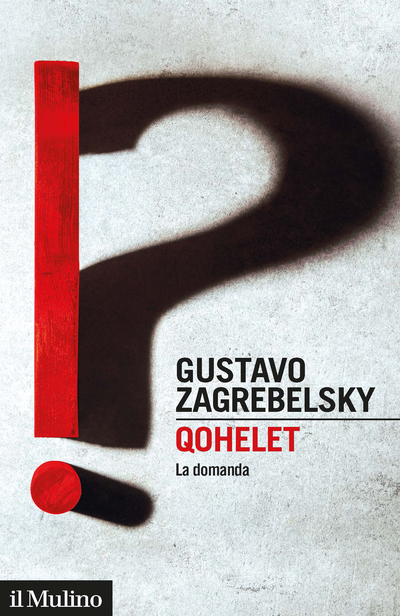
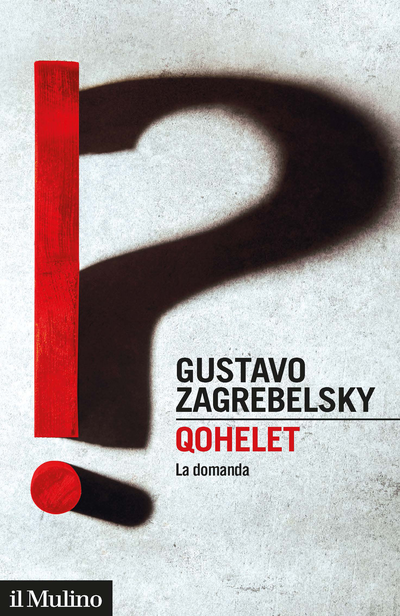
Qohelet by Gustavo Zagrebelsky

The new Gustavo Zagrebelsky's book Qohelet, Le domande dell'esistenza (il Mulino) is available.

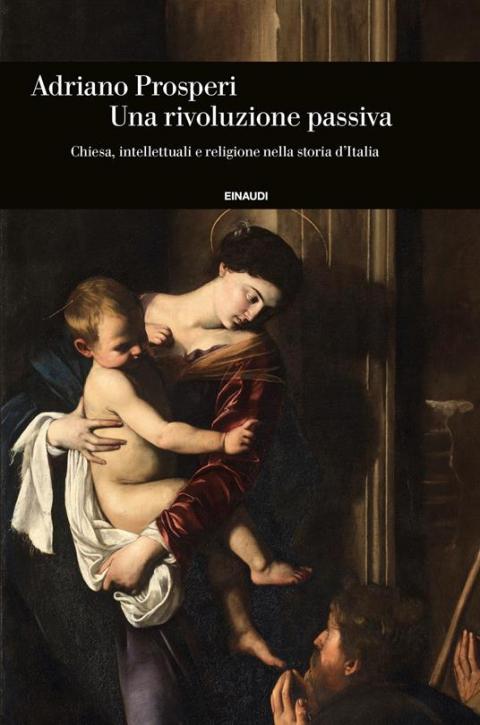
La rivoluzione passiva by Adriano Prosperi

London 2022 catalogue

Our London 2022 catalogue is available here.

Rapporti di forza by Carlo Ginzburg

The new edition of the Carlo Ginzburg's book Rapporti di forza has been published by Quodlibet.