Adriano Prosperi's Un tempo senza storia has been recently reviewed by:
- Massimo Firpo in Il Sole 24 Ore. Click here to download the review as a PDF.
- Paolo Di Stefano in Sette, Corriere della sera. PDF.
- Gianni Cuperlo in Domani. PDF.
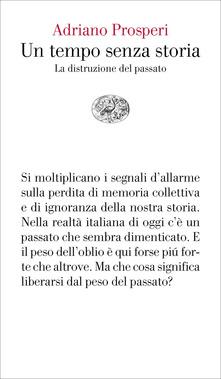
Adriano Prosperi's Un tempo senza storia has been recently reviewed by:
- Massimo Firpo in Il Sole 24 Ore. Click here to download the review as a PDF.
- Paolo Di Stefano in Sette, Corriere della sera. PDF.
- Gianni Cuperlo in Domani. PDF.

Marco Belpoliti's Pianura has been recently reviewed by Massimo Recalcati in La Repubblica.
Click here to download the review as a PDF.
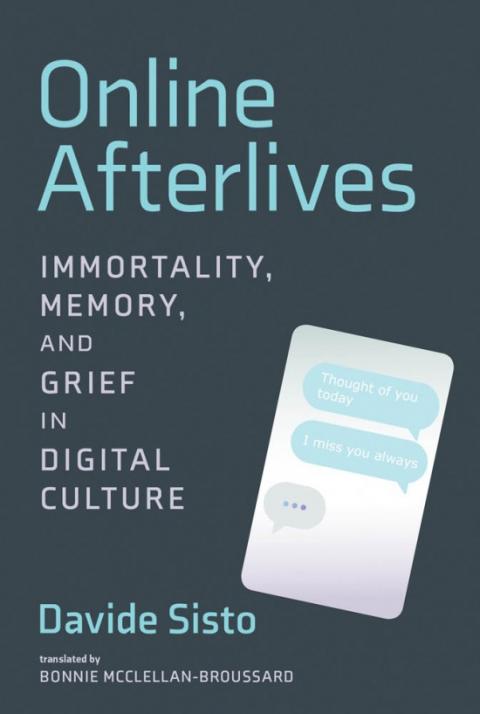
Online Afterlife, the English translation of La morte si fa social by Davide Sisto, has been mentioned by the Los Angeles Review of Books.
"There were some 50 million dead Facebook users as of June 2019, and the number of dead users is projected to exceed the number of living ones before too long; with each passing day, the platform is turning inexorably into a giant ghost ship. The burgeoning market for “digital end of life planning” services — with companies such as DeadSocial offering to help you sort out your “digital legacy” — reflects a growing acknowledgment that the bureaucracy of online life needs tending to in advance of IRL death. Davide Sisto, a philosopher and thanatologist at the University of Turin, has written a fascinating book on death and the internet, now translated into English by Bonnie Mcclellan-Broussard as Online Afterlives: Immortality, Memory, and Grief in Digital Culture."
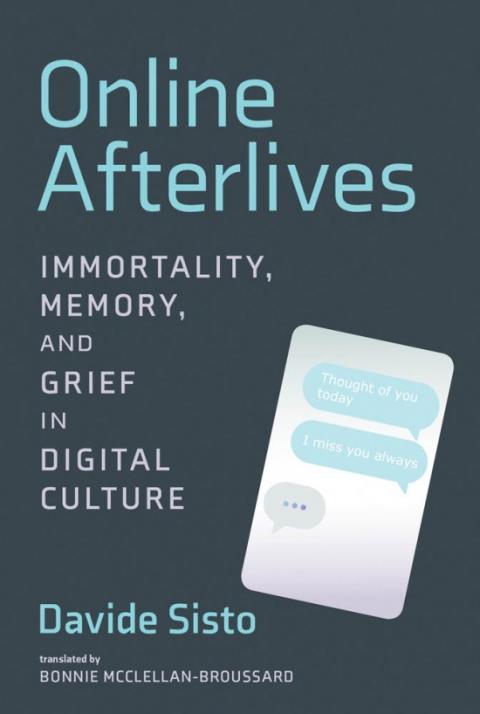
Online Afterlife, the English translation of La morte si fa social by Davide Sisto, has been mentioned by Nature:
"...a well-organized work, packed with insights [...] their books are fine, complementary guides to this new terrain."
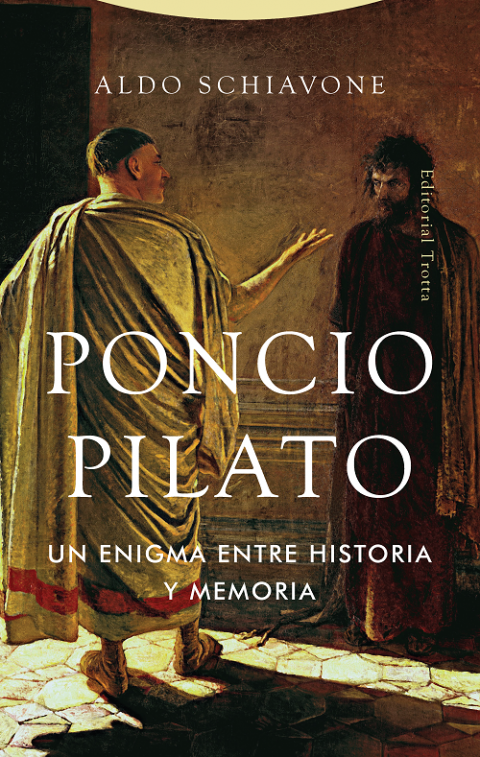
Ponzio Pilato by Aldo Schiavone was recently published in Spain by Trotta Editorial.
On El País (9th April 2020), Iñigo Domínguez wrote: «Este ensayo del erudito italiano Aldo Schiavone es uno de los trabajos más importantes sobre Pilato que se han publicado en los últimos años».
On April 10th José F. Serrano Oceja wrote on ABC Cultural: «Aldo Schiavone es un académico, romanista, ensayista, con una larga y compleja trayectoria académica. Su Poncio Pilato, escrito con elegancia, nos introduce de lleno no solo en la descripción del personaje sino en la sustancia de los acontecimientos que le hicieron pasar a la historia».
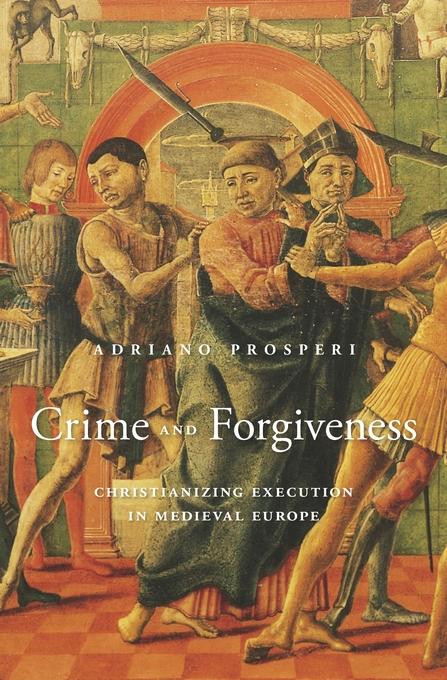
On June 29th Harvard Univerity Press will publish Crime and Forgiveness. Christianizing Execution in Medieval Europe, the English translation of Delitto e Perdono. La pena di morte nell'orizzonte mentale dell'Europa cristiana. XIV-XVIII secolo by Adriano Prosperi.
A provocative analysis of how Christianity helped legitimize the death penalty in early modern Europe, then throughout the Christian world, by turning execution into a great cathartic public ritual and the condemned into a Christ-like figure who accepts death to save humanity.
The public execution of criminals has been a common practice ever since ancient times. In this wide-ranging investigation of the death penalty in Europe from the fourteenth to the eighteenth century, noted Italian historian Adriano Prosperi identifies a crucial period when legal concepts of vengeance and justice merged with Christian beliefs in repentance and forgiveness.
Crime and Forgiveness begins with late antiquity but comes into sharp focus in fourteenth-century Italy, with the work of the Confraternities of Mercy, which offered Christian comfort to the condemned and were for centuries responsible for burying the dead. Under the brotherhoods’ influence, the ritual of public execution became Christianized, and the doomed person became a symbol of the fallen human condition. Because the time of death was known, this “ideal” sinner could be comforted and prepared for the next life through confession and repentance. In return, the community bearing witness to the execution offered forgiveness and a Christian burial. No longer facing eternal condemnation, the criminal in turn publicly forgave the executioner, and the death provided a moral lesson to the community.
Over time, as the practice of Christian comfort spread across Europe, it offered political authorities an opportunity to legitimize the death penalty and encode into law the right to kill and exact vengeance. But the contradictions created by Christianity’s central role in executions did not dissipate, and squaring the emotions and values surrounding state-sanctioned executions was not simple, then or now.
“From a distinguished Italian historian of early modern Europe comes a profound yet subtle work, written with great passion. Prosperi explores the comparative dimensions of Christianity’s relationships with public execution and its legitimization, principally in France, Germany, the Iberian peninsula, and England, with a particular focus on the religious confraternities devoted to consoling those condemned to be executed.”—Samuel K. Cohn, Jr., University of Glasgow

Fayard published recently the French translation of Eguaglianza by Aldo Schiavone. The French edition is titled Une histoire de l'égalité. This is how Fayard presents the book:
"Aldo Schiavone propose un voyage à travers les siècles, de la Grèce classique à la grande saison du capital et du travail, à la recherche d’un itinéraire alternatif pour penser l’égalité aujourd’hui. Quand l’histoire se fait clé de lecture d’une nouvelle idée de l’égalité, capable de donner sens à notre temps.
De la Grèce classique à la Rome impériale, de la première modernité à la grande saison du capital et du travail, l’idée d’égalité s’est élaborée au cœur de l’identité de l’Occident, entre égalité formelle des droits et égalité substantielle des conditions de vie. Mais la transformation technologique avec la fin de la grande industrie et la crise des anciennes structures de classe dans les pays les plus avancés ont mis à mal les fondements culturels, sociaux et économiques des paradigmes modernes de l’égalité et laissé un vide qui met en péril les sociétés occidentales contemporaines. Comment s’en sortir? Nous avons besoin d’opérer un changement radical dans notre façon de nous concevoir, loin des mythes du «social» et du «collectif», tout en laissant place à la révolution que nous sommes en train de vivre.
Quand l’histoire se fait clé de lecture d’une idée nouvelle, capable de donner sens à notre temps.
Historien de renommée internationale, Aldo Schiavone a dirigé l’Institut italien de sciences humaines. Il est l’un des plus grands spécialistes du droit romain et son ouvrage Ius: l’invention du droit en Occident (trad. fr. Belin, 2009) est une référence. Il a plus récemment publié chez Fayard un remarqué Ponce Pilate (trad. fr. 2016, réimpr. 2020)."
With his last book Ricordati di me, published by Bollati Boringhieri, Davide Sisto is one of the finalists for the Premio Napoli 2020, in the category Non Fiction.

Aldo Schiavone’s interview with Antonio Gnoli was published on Robinson-La Repubblica Saturday, 29th August 2020. Download the interview as PDF here.

The French translation of Eguaglianza by Aldo Schiavone, published by Fayard under the title Une histoire de l'égalité, has been recently reviewed by Libération and Le Figaro. Click here and here to download the reviews as.